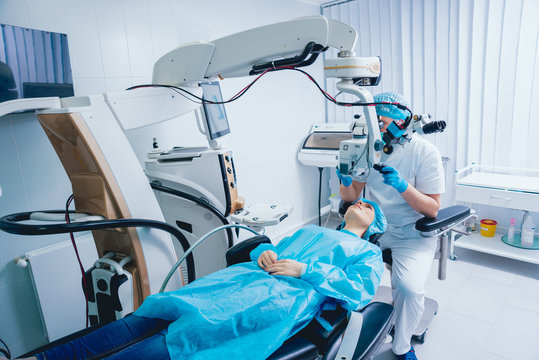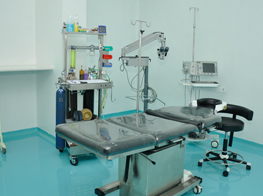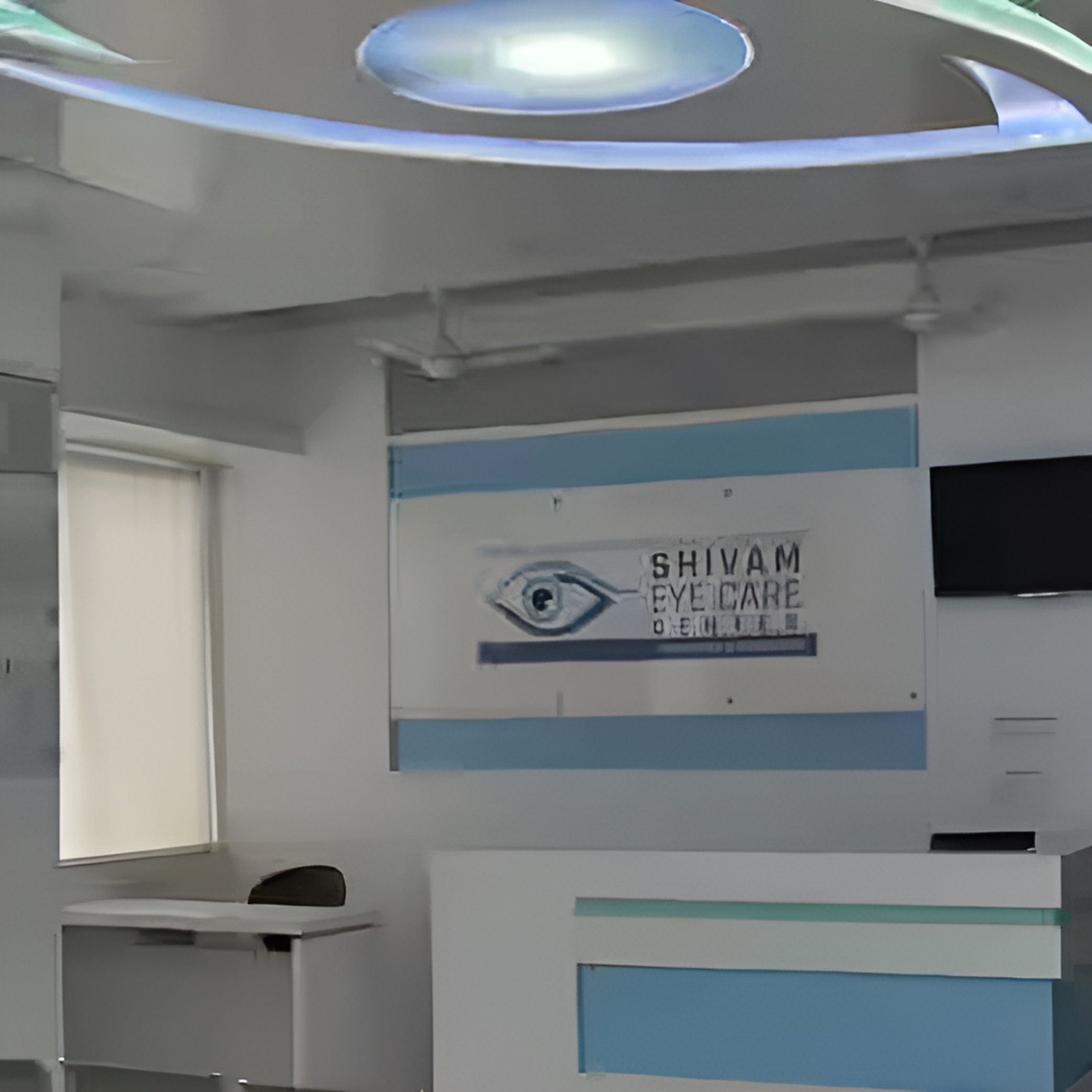
Two well-equipped operation theatres.
General and private wards for in-patients.
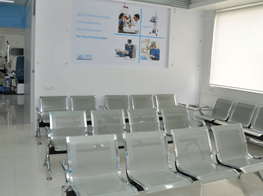
Comfortable lounges with recliners for day care surgeries.
Sutureless cataract.
Vitreoretinal surgery
 
Surgery and medical treatment for other disorders of the eye like squint , glaucoma and uveitis
Lasik ( surgery for spectacle number) is also carried out.

The hospital continues to strive in giving its patients the latest and best possible treatment and investigation modalities in eye care.

Patient Guide

EYE
The eye is one of the most complex organs in the body. Responsible for taking light signals to the brain, it functions as a natural camera that is an extension of the brain. It has several layers that are equivalent to the lens of the camera, the film, and the lens cover. Remember that any part of the eye can be involved in the disease process, and may require a subspecialist. to treat that particular disorder
Cornea
Like the glass on a watch, the cornea is the clear protective coating on the front of the eye that allows light to pass through it without distortion. It covers the colored iris. The lens of the eye focuses the images transmitted through the cornea to the retina. Therefore, it must be clear and regularly shaped to give good vision. These images are then transferred via the optic nerve to the brain, where sight is interpreted. A "scratched" cornea, when the surface layer is torn, is extremely painful.
Conjunctiva
The conjunctiva is the clear covering (like cellophane) of the white part of the eye, the sclera. When it gets irritated or infected it becomes red, which is called conjunctivitis. Conjunctivitis can be allergic or infectious; viral conjunctivitis is often called "pink eye."
Sclera
The sclera is the "white" part of the eye.
Lens
Every camera must have a lens to properly focus the picture. Your eye has a lens, too, which lies directly behind the pupil in the sac-like capsule. Your lens, which is about the size of an "M&M," is normally clear and transparent. It focuses images onto the retina, which acts as the film that records the picture. The picture is then transmitted by the optic nerve to the brain, where the image is interpreted. It's the brain that does the actual seeing.
Pupil
The dark center of the iris (the colored part of the eye) is the pupil. The pupil decides how much light is need for the eye to see properly. It changes sizes to adjust for changes in light.
Retina
The retina is the light-sensitive part of the eye. It has one major artery and one major vein, which is called the central retinal vein. Sometimes, branches of this vein can be blocked.
Uvea
The uvea is the middle section of the eye. It has three parts: the iris (the colored part of the eye), the ciliary body and the choroid. Inflammation (or swelling) of any of these parts or their adjacent tissues is called "uveitis."
Macula
The macula is a part of the eye that contains special light-sensitive cells which allows us to see fine details clearly. It is located in the retina. The macula is an important part of the eye because even small changes can cause severe vision loss.
Vitreous
The vitreous is the clear jelly-like substance that fills the middle part of the eye.
Optic Nerve
The optic nerve is the pathway that connects the eye to the brain. It is the means through which images captured by the retina reach the brain, where those images are interpreted.
Eyelids
The lids of each eye are vital to the preservation of sight. They maintain vision by keeping moisture inside, and foreign particles outside of the eye. Without eyelids, our eyes would quickly dry out from exposure to air, or could be damaged severely by a cinder, pebble, or some other foreign object. Think of how fast you blink when something approaches your eye. There are, however, many ways the lids may be damaged. They may be cut or burned in an accident, be involved in infections, or be invaded by many different types of tumors. These tumors can be benign (not cancerous) or malignant (cancerous). Two other common lid problems are droopy eye lids (ptosis) and baggy eyelids (dermatochalasis). Droopy eyelids can be acquired or congenital. Droopy eyelids are seen most often in children and baggy eyelids are more common in older people. However, both can usually be corrected quite successfully.
The Lacrimal System
The lacrimal (tear) system is a miniature drainage network, which prevents tears from continuously rolling down the cheeks. From the surface of the eye, the tears flow along the edge of the lids toward the nose. Just before reaching the corner of the eye, the tears slide into two tiny drain tubes, and then into a larger tube which carries the tears into the nose. This explains why crying often causes one to blow one's nose. Many problems may cause the tear system to drain poorly. For instance, an accident may cut one of the two tiny drainage tubes, a long-standing infection may scar these tubes, or tumors may invade parts of the tear system. All of these may lead to poor drainage causing the tears to well up in the eye and roll down the cheek. Fortunately, surgery or other kinds of procedures can usually relieve this uncomfortable situation and restore a functional system. Many infants, about 20 percent, are born with tear ducts or drain tubes that have not opened. This usually leads to a chronic and ow-grade infection in the tear drainage system. That causes a mixture of mucus and pus to accumulate in the inner corner of the eyes, between the lids. Parents should wipe that away with anything clean, such as a tissue. The volume of this accumulation can be reduced by applying antibiotic dropper ointment to the affected eye. Nearly all of the time, the blockage of this drainage system will open by one year of age. If the duct has not opened by the child's first birthday, an ophthalmologist may open the blocked naso-lacrimal duct by a simple procedure called probing of the naso-lacrimal system. This brief procedure requires a brief period of general anesthesia and a short outpatient stay in the hospital. Some ophthalmologists probe in the office, without general anesthesia, but usually before the child is one year old.
The Orbit
The orbit is the bony housing in which the eyeball sits. If you place your finger on your brow and press down, you will feel the edge of the orbit. By continuing to move your finger around in a circle, you can feel the orbit protection provided the eyeball on all sides, except in the front where the lids protect the eye. Between the bony housing and the eyeball are other structures such as fat, muscle, blood vessels and glands. These are known as the orbital contents. The orbital contents may develop a tumor, causing the eye to protrude. Often, these tumors have to be removed to help maintain normal eye function. The orbit can also suffer fractures during trauma to the eye. Therefore, it is always wise to use certified, shatterproof eyewear whenever engaging in sports.
Uvea
The uvea is the middle layer of the wall of the eye. It has three parts: the iris, the ciliary body and the choroid. Inflammation (or swelling) of any part of the uvea is called uveitis It has many causes, but they are hard to identify.
The symptoms of uveitis depend upon the area that is inflamed and the duration of inflammation. Acute iritis may cause a red eye with pain and sensitivity to light. Chronic and posterior inflammation may be painless but may cause symptoms such as floaters or decreased vision. These symptoms should alert you to seek expert medical attention promptly.
A careful medical history, including family, social and sexual history, is important in the uveitis patient. Evaluation of uveitis is directed toward the diagnosis and identification of possible underlying causes of the disease. Bacteria, fungi, viruses, protozoa or other agents along with abnormalities of the immune system can cause uveitis. Testing may involve blood tests, X-rays, special ocular studies or evaluation by other skilled medical consultants beyond ophthalmology.
A full medical evaluation may reveal an inflammatory disease that has involved other organs besides the eye. Examples of this include sarcoidosis, rheumatoid arthritis, syphilis, and related conditions. For these types of conditions, treatment for the underlying cause of the uveitis helps all parts of the body, including the eye.
In most cases, no obvious underlying cause is found for the uveitis. Treatment then is directed to the eye inflammation alone. Treatment may include drops or injections of cortisone medication around the eye. Sometimes it may be necessary to use oral drugs that suppress inflammation, such as prednisone or cytotoxic (chemotherapeutic) agents. Treatment may be prolonged for uveitis. Therefore, close follow-up with an ophthalmologist is important to keep the eye functional and to detect occasional side effects from the treatments.


Procedure for examination

After you register with the reception, you will be given a card with your unique number which you can quote in all your future visits and correspondence. In case you lose the card- please inform the staff- they can retrieve your number from the computer records

Your vision and number will be checked using the autorefractometer ( Or computerised eye testing in lay terms)
The pressure of your eye will be recorded using the Pneumo Tonometer or air puff tonometer. You will feel a small puff of air on your cornea during this test so do not get alarmed. If your pressure is abnormal or if you have glaucoma , the pressure will be rechecked using the Applanation Tonometer
The front part of your eye will be checked using the Slit Lamp. In this test a bright light will be focused using a special instrument
Drops will then be instilled in your eyes to dilate the pupils to enable us to see the retina or the inside part of the eye. Please inform if you have any allergy to any drops at this stage. Dilating drops blur the near vision and give you glare , so please inform if you have to drive back home and would like to do it some other time.
After dilating – your retina will be examined using the Indirect Ophthalmoscope which focuses a bright light on to your eye
Some special tests for crossed eyes may be carried out in certain cases
After the whole examination , you will be explained about your eye condition and if necessary – certain special tests such as Fundus Fluorescein Angiography( FFA) , Ultrasonography, Perimetry, Corneal Topography may be advised
You may be advised treatment in the form of drops, glasses or in certain cases Laser treatment for retinal diseases, for some forms of Glaucoma and for myopia . You may be advised surgery , the procedure of which will be explained to you in detail

Do not hesitate to clear any doubts you have regarding any form of examination or treatment carried out or advised.


Copyright © 2008 Shivam Eye Hospital & Clinic, All rights reseved